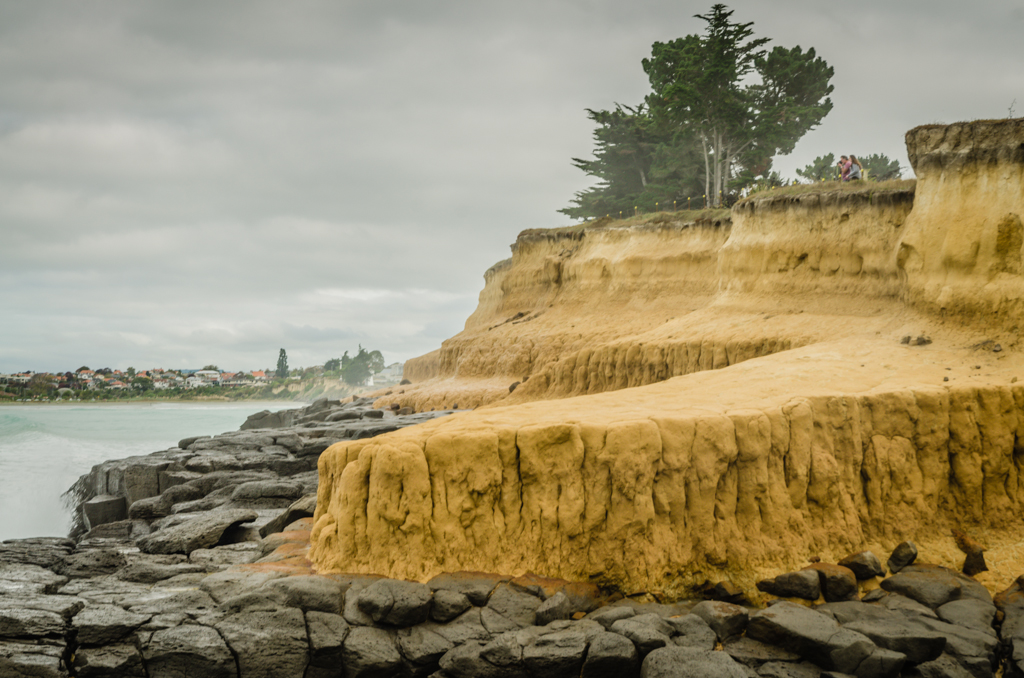
The Soviet Union was dismantled in 1990 and a widespread network of loess investigation and loess research vanished with it. In 1988, very close to the end of the Soviet period M.Yu.Abelev, a senior investigator, addressed a conference in Beijing, on loess in the USSR. He described the world of loess geotechnology, probably unaware that the end-times were so close. He recorded that 30,000 people in the USSR were concerned with the problems of research into the properties of loess and the development of methods of construction on loess soils. This seems like an incredibly large number but, back in 1988, there was a large amount of loess territory under Soviet control.
Abelev listed some interesting geography: loess soils constituted more than 14% of the total territory of the USSR. Such soils were widely spread over the territory of the whole Soviet Union to the south of the 60N latitude. They occupied more than 80% of the territory of many of the union republics such as the Uzbek SSR, Tadzhik SSR, Kirghiz SSR, Ukrainian SSR, Moldovian SSR and Azerbaijan SSR. Loess soils were also encountered in the Georgian SSR, Kazakh SSR and in quite a few regions of the RSFSR. A great many residential buildings in cities and towns and big industrial enterprises were being erected on loess. In many buildings and structures erected in the 1920s and 1930s deformations developed and failures sometimes occurred. Post- 1930 in the USSR under the supervision of Professor Yu.M.Abelev (1897-1971; father of M.Yu.Abelev) special research laboratories and production institutes were founded which were concerned with the research and development into reliable methods of construction of industrial and civil structures on loess ground.
New laboratories concerned with investigations into the properties of loess were set up in Kiev, Tashkent, Baku and Dnepropetrovsk; the four Soviet Loess Laboratories. Now, 30 years after Abelev delivered his paper, the quondam-loess of the USSR is in separate new countries and the all union loess network is broken.
2 references
Abelev, Yu.M. ,Abelev, M.Yu. 1968. Fundamentals of design and construction on collapsible marcoporous ground. Izdatel'stvo Literatury po Stroitel'stvu, Moscow 2nd.ed (this 2nd edition is probably better than the 1979 3rd edition- certainly cartographically).
Abelev, M.Yu. 1988/1989. Loess and its engineering problems in the USSR. in Engineering Problems of Regional Soils (International Conference Beijing 1988) ed.CCES, Pergamon Press, Oxford, pp.3-6
Some additional material from V.I.Krutov:
[Krutov, V.I. 1987. Foundation construction on collapsible soils. Soil Mechanics & Foundation Engineering 24, 219-223.]
Collapsible soils ~10% USSR territory; recent (1989) construction 30%- in the regions intense construction activity. Problems arose in the 1920s with irrigation systems in Central Asia and the North Caucasus, and oil industry construction at Grozny. Then the first 5 year plans, large metallurgical and machine manufacturing plants in Zaporozhe, Nikopol, Dneproptetrovsk, Zhadanov, Kherson and Kuznetsk, also irrigation systems and hydraulic structures in Central Asia, the N. Caucasus, & Transcaucasia.
Post-war years: largest industrial structuresd: VAZ, KamAZ, Atommash, KZTE etc. Residential and industrial construction in Ukraine, the Rostov region, Siberia & Central Asia,
First solutions to foundation problems by Yu.M. Abelev (1931). Later contributions from M.Yu. Abelev, V.P. Anan'ev, Kh.A. Askarov, L.G. Balaev, Ya.D. Gil'man, V.N. Golubkov, M.N. Goldstein, A.A. Grigoriyan, N.Ya. Denisov, S.N. Klepikov, A.A. Kirilov, N.I. Kriger, A.K. Larionov, I.M. Litvinov, G.M. Lomize, G.A. Mavlyanov, A.A. Musaelyan, A.A. Mustafaev, N.A. Ostashev, A.L. Rubinshtein, E.M. Sergeev, V.E. Sokolovich, R.A. Tokar' & N.A. Tsytovich.
afterword from Osipov & Sokolov
[Osipov, V.I., Sokolov, V.N. 1995. Factors & mechanism of loess collapse. in Genesis & Properties of Collapsible Soils. ed. E.Derbyshire, T.Dijkstra & I.J.Smalley. NATO ASI series 468, Kluwer]
55 cities & towns in Russian regions affected by loess collapse; 3.5 million km2 in area. They list 6 relevant books:
Anan'ev, V.P. 1964. Mineralogical composition and loessial soils properties. RGU Rostov-on-Don 218p.
Balaev, L.G., Tsaryev, P.V. 1964. Loessial soils of Central & Eastern Pre-Caucasus area. Nauka Moscow 248p.
Kriger, N.I. 1965. Loess, its properties & relation to the geohgraphical environment. Nauka Moscow 296p.
Krutov, V.I. 1982. Bases and foundations on collapsible soils. Budivel'nik Kiev.
Larionov, A.K. 1971. Research methods of soil structures. Nedra Moscow 168p.
Sergeev, E.M., Larionov, A.N., Komissarova, N.N. eds. 1986. Loess in the USSR.

Abelev listed some interesting geography: loess soils constituted more than 14% of the total territory of the USSR. Such soils were widely spread over the territory of the whole Soviet Union to the south of the 60N latitude. They occupied more than 80% of the territory of many of the union republics such as the Uzbek SSR, Tadzhik SSR, Kirghiz SSR, Ukrainian SSR, Moldovian SSR and Azerbaijan SSR. Loess soils were also encountered in the Georgian SSR, Kazakh SSR and in quite a few regions of the RSFSR. A great many residential buildings in cities and towns and big industrial enterprises were being erected on loess. In
 many buildings and structures erected in the 1920s and 1930s deformations developed and failures sometimes occurred. Post- 1930 in the USSR under the supervision of Professor Yu.M.Abelev (1897-1971; father of M.Yu.Abelev) special research laboratories and production institutes were founded which were concerned with the research and development into reliable methods of construction of industrial and civil structures on loess ground.
 New laboratories concerned with investigations into the properties of loess were set up in Kiev, Tashkent, Baku and Dnepropetrovsk; the four Soviet Loess Laboratories. Now, 30 years after Abelev delivered his paper, the quondam-loess of the USSR is in separate new countries and the all union loess network is broken.
2 references
Abelev, Yu.M. ,Abelev, M.Yu. 1968. Fundamentals of design and construction on collapsible marcoporous ground. Izdatel'stvo Literatury po Stroitel'stvu, Moscow 2nd.ed (this 2nd edition is probably better than the 1979 3rd edition- certainly cartographically).
Abelev, M.Yu. 1988/1989. Loess and its engineering problems in the USSR. in Engineering Problems of Regional Soils (International Conference Beijing 1988) ed.CCES, Pergamon Press, Oxford, pp.3-6
Some additional material from V.I.Krutov:
[Krutov, V.I. 1987. Foundation construction on collapsible soils. Soil Mechanics & Foundation Engineering 24, 219-223.]
Collapsible soils ~10% USSR territory; recent (1989) construction 30%- in the regions intense construction activity. Problems arose in the 1920s with irrigation systems in Central Asia and the North Caucasus, and oil industry construction at Grozny. Then the first 5 year plans, large metallurgical and machine manufacturing plants in Zaporozhe, Nikopol, Dneproptetrovsk, Zhadanov, Kherson and Kuznetsk, also irrigation systems and hydraulic structures in Central Asia, the N. Caucasus, & Transcaucasia.
Post-war years: largest industrial structuresd: VAZ, KamAZ, Atommash, KZTE etc. Residential and industrial construction in Ukraine, the Rostov region, Siberia & Central Asia,
First solutions to foundation problems by Yu.M. Abelev (1931). Later contributions from M.Yu. Abelev, V.P. Anan'ev, Kh.A. Askarov, L.G. Balaev, Ya.D. Gil'man, V.N. Golubkov, M.N. Goldstein, A.A. Grigoriyan, N.Ya. Denisov, S.N. Klepikov, A.A. Kirilov, N.I. Kriger, A.K. Larionov, I.M. Litvinov, G.M. Lomize, G.A. Mavlyanov, A.A. Musaelyan, A.A. Mustafaev, N.A. Ostashev, A.L. Rubinshtein, E.M. Sergeev, V.E. Sokolovich, R.A. Tokar' & N.A. Tsytovich.
afterword from Osipov & Sokolov
[Osipov, V.I., Sokolov, V.N. 1995. Factors & mechanism of loess collapse. in Genesis & Properties of Collapsible Soils. ed. E.Derbyshire, T.Dijkstra & I.J.Smalley. NATO ASI series 468, Kluwer]
55 cities & towns in Russian regions affected by loess collapse; 3.5 million km2 in area. They list 6 relevant books:
Anan'ev, V.P. 1964. Mineralogical composition and loessial soils properties. RGU Rostov-on-Don 218p.
Balaev, L.G., Tsaryev, P.V. 1964. Loessial soils of Central & Eastern Pre-Caucasus area. Nauka Moscow 248p.
Kriger, N.I. 1965. Loess, its properties & relation to the geohgraphical environment. Nauka Moscow 296p.
Krutov, V.I. 1982. Bases and foundations on collapsible soils. Budivel'nik Kiev.
Larionov, A.K. 1971. Research methods of soil structures. Nedra Moscow 168p.
Sergeev, E.M., Larionov, A.N., Komissarova, N.N. eds. 1986. Loess in the USSR.